Can You Really Book a Flight Using Your Voice?

For years, booking a flight has followed the same routine: open a travel website, fill out multiple search fields, compare dozens of options, adjust filters, and repeat the process until you find the right flight.
But what if you could skip all of that and simply say:
“Book me a flight from Chicago to Boston next Friday.”
It sounds futuristic, but voice-powered flight booking is quickly becoming a reality.
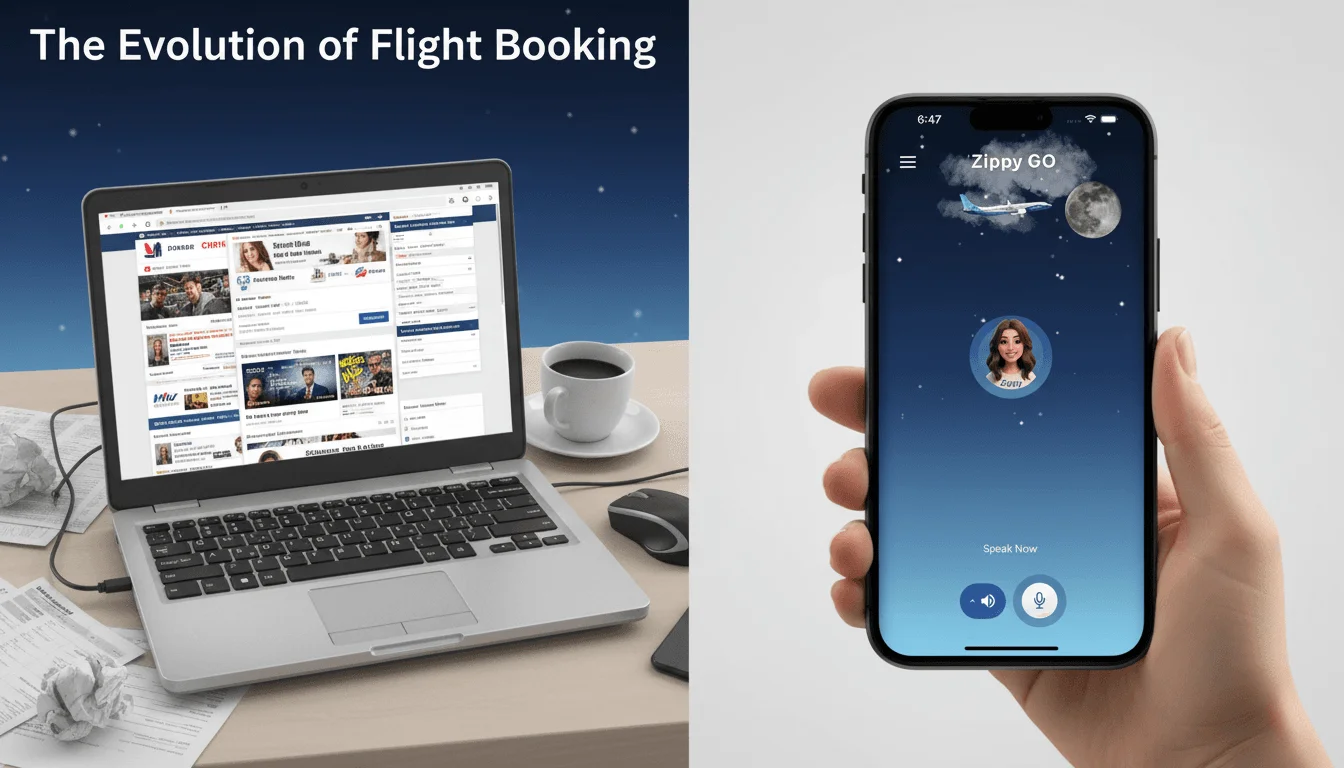
The Evolution of Travel Booking
Travel booking has come a long way. We moved from travel agents to online travel agencies, then to mobile apps that allowed users to search and book flights on the go.
The next step is even simpler: conversational travel booking.
Instead of navigating forms and dropdown menus, travelers can now interact with AI-powered assistants using natural language, just as they would talk to a human travel agent.
How Voice Flight Booking Works
Voice-based flight booking uses artificial intelligence and natural language processing (NLP) to understand a traveler’s request.
For example, you can say:
- "Find me the cheapest flight from Chicago to Los Angeles this weekend."
- "I need a morning flight to Dallas next Monday."
- "Book a round-trip flight to Orlando for two adults."
The AI understands your intent, searches available flight options, compares fares, and presents the most relevant choices — all through a simple conversation.
Instead of filling out forms, you simply describe your travel needs.
Why Travelers Are Interested in Voice Booking
1. Faster Searches
Traditional flight booking often requires multiple searches and filter adjustments. With voice booking, you can describe exactly what you want in one sentence, reducing the time spent searching.
2. More Natural Experience
Humans naturally communicate through conversation. Rather than selecting options from multiple menus, travelers can explain their preferences in plain language.
3. Reduced Friction
Many travelers abandon bookings because the process feels overwhelming. Voice interactions simplify the journey by eliminating unnecessary steps and making travel planning more intuitive.
4. Mobile-Friendly
Voice booking is particularly useful on smartphones, where typing and navigating forms can be cumbersome. A quick voice command can often accomplish what would normally take several minutes.
Is Voice Booking Accurate?
Modern AI systems have become remarkably good at understanding natural language.
They can interpret:
- Dates and times
- Destination preferences
- Budget requirements
- Trip types (one-way, round-trip, multi-city)
- Passenger details
As voice AI technology continues to improve, booking experiences become more accurate, personalized, and efficient.
Introducing ZippyGo: Voice-Based Flight Booking Made Simple
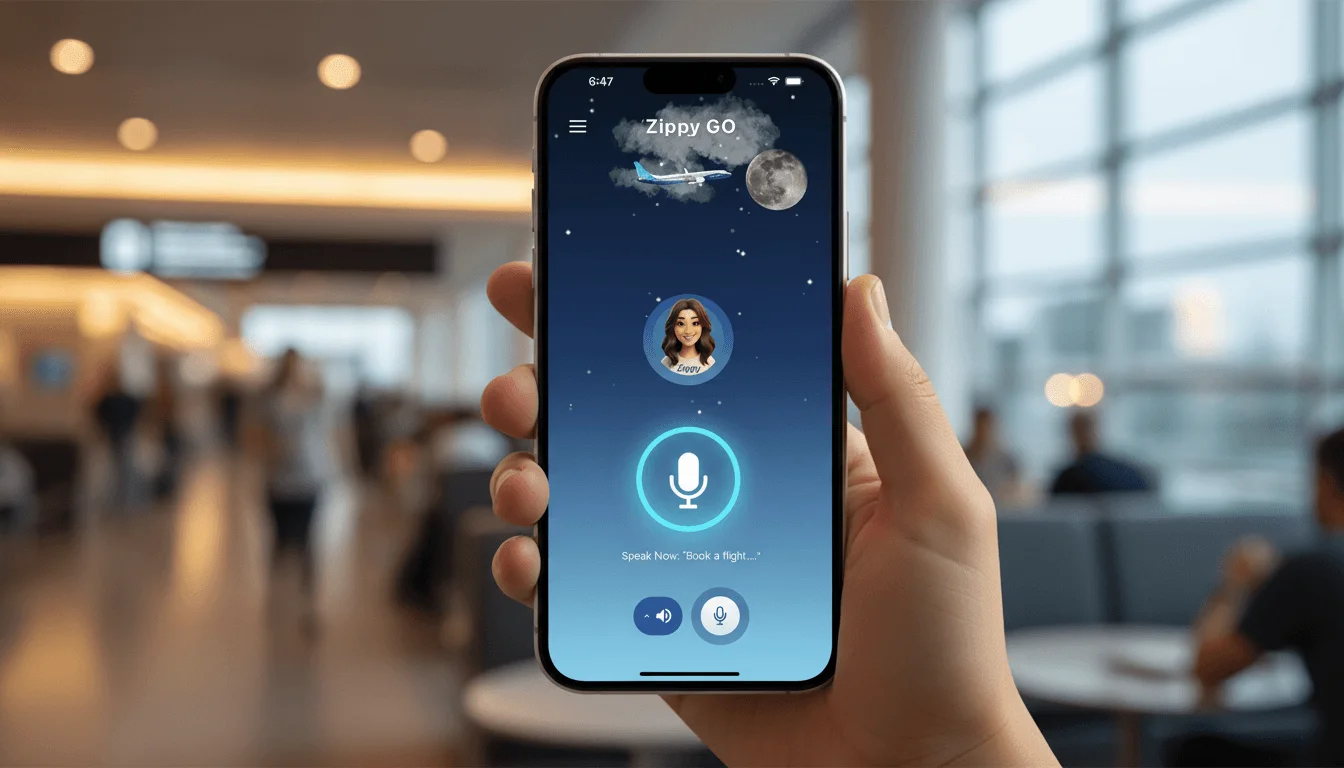
At ZippyGo, we believe booking a flight should feel as easy as having a conversation.
Instead of navigating multiple travel websites and comparing endless options, travelers can simply tell ZippyGo where they want to go.
For example:
“Book me a flight from San Francisco to Miami next Friday.”
ZippyGo’s AI-powered travel assistant understands the request, searches available flight options, compares fares, and helps travelers find the best choice quickly and effortlessly.
No complicated forms. No endless tabs. No unnecessary searching. Just a simple conversation.
The Future of Flight Booking
Voice technology is changing how people interact with digital services, from smart homes to online shopping. Travel is following the same path.
As AI becomes more advanced, conversational booking experiences will likely become a standard way for travelers to search, compare, and book flights.
The future isn’t about clicking through more screens. It’s about simply asking for what you need and getting results instantly.
Final Thoughts
So, can you really book a flight using your voice? Absolutely.
Voice-powered travel technology is transforming the booking experience by making it faster, easier, and more natural.
Platforms like ZippyGo are leading this shift, helping travelers move from complicated forms and endless searches to simple, intelligent conversations.
The next time you need a flight, you may not need to type at all — you might just need to ask.